Why Solscan Became My Go‑to Solana Explorer (and How to Use It Like a Pro)
Okay, so check this out—I’ve bounced between half a dozen Solana explorers over the years. Whoa! Some are slick, some are slow, and a couple feel like they were made by people who hate UX. My instinct said: find the tool that gives you the clearest truth fast. Initially I thought the stock web explorer would do the job, but then I started digging into token flows, memos, and inner instructions and realized I needed something more surgical. Actually, wait—let me rephrase that: I needed an explorer that blends fast search with deep analytics, and for me, that ended up being Solscan.
Seriously? Yep. Solscan isn’t perfect, but it strikes the sweetest balance between clarity and power. Hmm… here’s the thing. If you want to trace a transaction, inspect a program, or follow an NFT mint from contract to holder, you want an explorer that doesn’t make you hunt for the data. Solscan does that very well—very very fast in many cases. I’m biased, but this part bugs me when other explorers hide inner-instruction details or make the JSON view obtuse.
Before we get too deep—short practical takeaway: if you use Solana regularly, add a bookmark for a good explorer and learn a couple of keyboard shortcuts. It saves time. (oh, and by the way… practice reading transactions in the raw; it helps more than you think.)
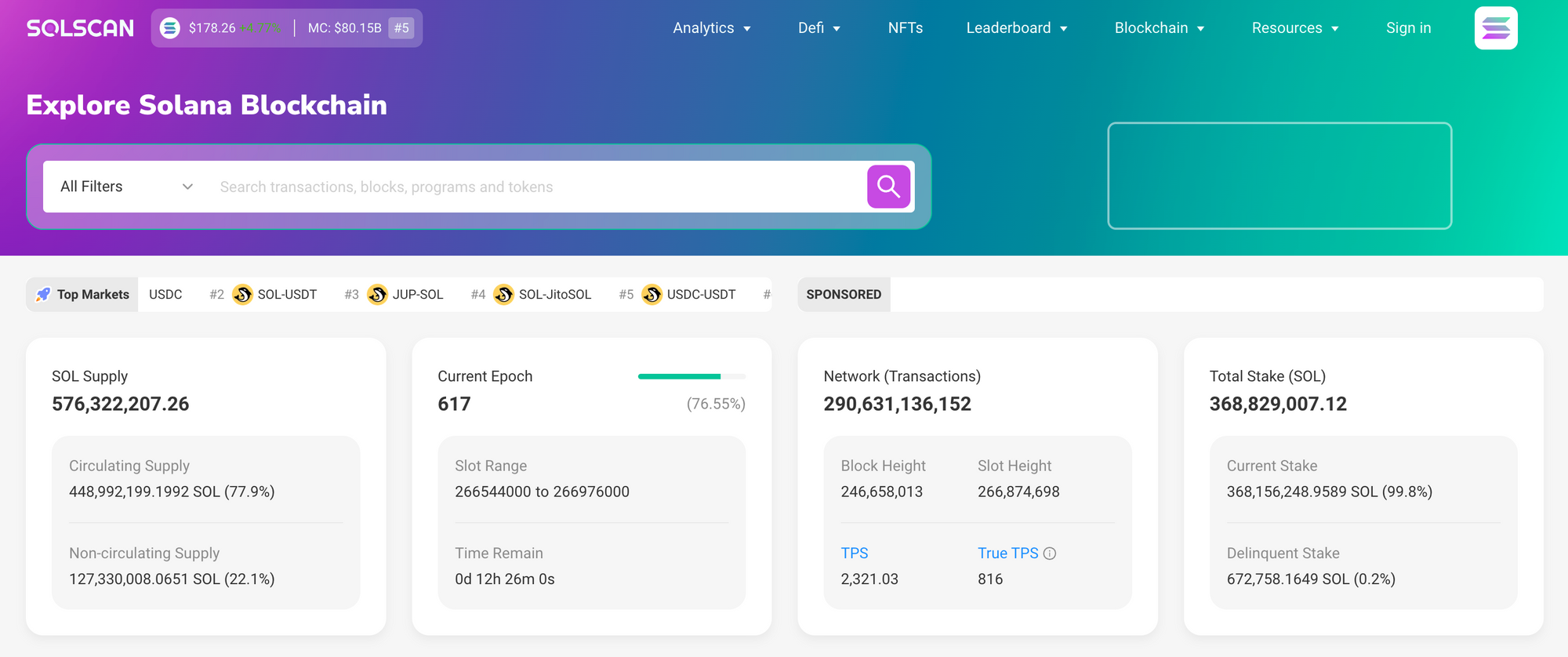
First impressions vs. deep dive — what Solscan gives you
First glance: clean transaction pages, token and account snapshots, and a clear timeline. Then you click into a transaction and—wow—the inner instructions, pre/post balances, log output, and CPI calls are all laid out. On one hand, that’s great for debugging. Though actually, there’s a learning curve if you haven’t parsed pre/post balances before. My first few dives felt like drinking from a firehose; I got used to it. Over time, I learned to spot failed CPI chains and the subtle balance deltas that reveal what’s really happening under the hood.
Pro tip: use the “Instructions” and “Token Transfers” panels together. They tell complementary stories—one shows the logical steps, the other shows the resource movements. If something weird happens, trace the token transfer timestamps against instruction indices. That often points to race conditions or bad assumptions in the client code.
Want to be efficient? Learn the search patterns. You can paste a wallet, token mint, or transaction signature. Use filter toggles to narrow programs, or jump to block numbers when exploring for systemic issues. I’ve used Solscan to audit airdrop distributions and to confirm whether a bot sniped an NFT mint—both times, the timeline and fee breakdown were crucial.
Why the analytics matter for power users
Analytics separate casual browsing from operational insight. Solscan provides token holder charts, percentile distributions, and transfer counts. These visuals are not just pretty—they help you profile token concentration and potential rug-risk. I ran a quick check on a late-stage token project and the top holders graph told me half the supply lived in three addresses. That raised a flag for me: governance and sell-pressure risk are real.
For devs, the program page can be revelatory. You get verified source indicators, program upgradeability status, and a list of related accounts. It helped me debug a program that was accidentally writable where it should have been immutable—yikes. Seeing the account’s owner and rent-exempt info made the fix obvious.
And, naturally, the API matters. Solscan’s public endpoints let you pull transaction lists, token holders, and more. If you’re building tooling—wallets, dashboards, bot-monitors—you’ll appreciate stable API responses. I don’t want to oversell it: rate limits exist, and sometimes endpoints evolve. Always build with retries and schema validation.
Practical workflows I use daily
1) Transaction triage: paste signature > check status/logs > inspect inner instructions > confirm token movements. If a transaction failed, the logs usually point at the failing program call—read them top-to-bottom, not skipping the early warnings. 2) Holder audits: open token page > view holders > export or snapshot. It helps to export CSVs for quick spreadsheet analysis. 3) Contract checks: program page > verified source tag > check upgradeability and binary hash. 4) NFT tracing: open mint > view metadata link > trace transfers to see the initial minter and early collectors.
One practical habit that saved me time: copy the block time and paste it into a local log. When fighting bots or network congestion, correlating time-of-day with failed mints helped me predict when congestion spikes. (I’m not 100% sure that pattern holds forever, but it was consistent across a few drops.)
Security and privacy considerations
Look—on-chain data is public. Using Solscan, or any explorer, doesn’t make a wallet more exposed than it already is. But your behavior can. If you paste private keys anywhere—nope, that’s a cardinal sin. When you’re auditing airdrops or blacklisting addresses, remember that linking addresses to off-chain identities requires extra care. My instinct said to avoid making speculative public accusations based only on chain data; sometimes context is missing.
Also, verified labels help but aren’t foolproof. A verified badge means the source provided matching metadata, not that humans fully audited the contract. So treat verified projects as “probably legit,” not untouchable. I once saw a social-engineering attempt that used copycat metadata to mislead users—so be skeptical.
Where Solscan shines vs. where it falls short
Shines: quick search, clear transaction breakdowns, token-holder analytics, and approachable program pages. The UX is pragmatic—it’s built for people who actually need to understand what’s happening. Falls short: occasional downtime during heavy congestion, some fields use jargon that can confuse newcomers, and advanced analytics (on-chain graphing beyond basic holder charts) can be limited compared to bespoke tooling. For deeper behavior analytics you might still export data and run it through your own pipelines.
Want the official place to start? I usually point people to Solscan’s primary pages when they ask. Here’s the link I use and trust: https://sites.google.com/cryptowalletextensionus.com/solscan-explorer-official-site/ —that’ll take you to an entry point for explorer resources and documentation.
Note: I’m not paid by any explorer. I use a mix of tools depending on the task. Some are great for raw raw ledger dumps, others for UX. Solscan is my go-to when I want a readable, actionable view without spinning up a node.
FAQ
Q: Can Solscan decode program logs for custom programs?
A: Sort of. If the program emits human-readable logs (via msg! or similar), Solscan surfaces them. For encoded binary payloads, you’ll need the program’s IDL or local decoding logic. My workflow: grab the logs from Solscan, then run them through a local parser if needed.
Q: Is the API reliable for production use?
A: It’s usable, but build defensively. Expect rate limits and occasional schema changes. For high-throughput applications, consider caching, exponential backoff, and a backup data source or your own indexing service.
Q: How do I verify an NFT’s metadata?
A: Open the mint’s token page, follow the on-chain metadata URI, and verify the content against the on-chain hash when available. Also check the initial mint transaction to see the creator and any royalties encoded—this gives you context about provenance and intent.